
Overview
As cyber attacks challenge our digital infrastructure, the demand for skilled cyber security professionals is soaring. The cyber security sector now sits at the centre of national and global priorities, offering sophisticated career opportunities for professionals who can anticipate threats, shape secure systems and uphold public trust. For those ready to lead in this critical field, a career in cyber security offers the chance to make a tangible impact and drive the future of digital safety.
By studying an online Master of Cyber Security, you will gain the advanced expertise employers demand. UNSW’s practical, research-informed program blends technical skill with strategic insight, ensuring you graduate ready to solve complex security challenges and lead in any technology-driven environment.
Why study with us?
UNSW Online’s Master of Cyber Security is one of Australia’s leading postgraduate cyber security programs and is designed to be completed 100% online in an accelerated format. Tailor your studies to suit your career goals by specialising in either Security Management and Leadership or Security Engineering, ensuring you gain the expertise needed to excel in your chosen path.
Our program is shaped by industry experts from UNSW Canberra at the Australian Defence Force Academy (ADFA) and Australia’s #1 faculty for Engineering and Technology*. Grounded in the latest research, our courses equip you with practical skills to address real-world security challenges. This unique blend of theoretical knowledge and hands-on coursework will develop your leadership capabilities and expertise in high-demand areas of cyber security. Graduates leave the program with the confidence to analyse complex cyber threats, design secure systems and lead cyber security initiatives across government, industry and critical infrastructure sectors.
As a global top 20 university**, UNSW provides the academic excellence and industry connections employers value. You'll learn alongside academics and peers who are dedicated to shaping the future of digital security and graduate ready to excel in high-impact cyber security roles.
*QS World University Rankings by Subject, 2026
**QS World University Rankings, 2024–2026
Duration
2 years, part time
Courses
12
Intake
Jan, Mar, May, Jul, Aug, Oct
Program code
8649
Develop advanced expertise in cyber defence, penetration testing, cloud security and digital risk management through hands-on labs and simulated attack environments. Our program exposes you to advanced threat modelling, security engineering, and the security risks associated with new technologies, ensuring you are well equipped to protect modern digital systems.
You will learn how to:
- design secure systems
- detect and analyse cyber threats
- protect complex digital systems in an increasingly AI-driven world
- analyse complex security challenges and respond effectively
- communicate cyber risk clearly to decision-makers, translating technical threats into strategic insights
use professional cyber security tools including Python, Wireshark, Metasploit and Kali Linux.
Program Structure
Across 12 courses students complete a mix of core courses and a chosen specialisation, allowing them to develop either deep technical cyber security expertise or strategic leadership capability. Each specialisation includes a capstone project allowing students to integrate and demonstrate the advanced skills they have learnt throughout the program.
Core courses
- Data Security and Privacy
- Cybersecurity Ethics
- Principles of Security Engineering
Specialisation options
- Security Engineering
For professionals pursuing advanced technical roles. This specialisation focuses on ethical hacking, secure system architecture, vulnerability analysis and incident response.
- Security Management and Leadership
The Security Management and Leadership specialisation relates to the emerging human, socio-technical and leadership aspects of cyber security. It will instill the skills and understanding of managing a team of cyber security professionals, and also to understand and contribute to the wider narrative of which cybersecurity is a part.
To find out more about each course and specialisation, download your program guide.
Course availability is dependent on initial intake timing and following student participation in study periods. For more information, speak with a Student Advisor.
In addition to the three core courses listed above you will select one of the following specialisations.
Security Management and Leadership Specialisation
Specialisation core courses
You must complete at least four courses from the below list:
- Cyber Operations
- Cyber Risk and Resilience
- Cyber Management and Governance
- Cyber Threats and Crime
- Cyber and the Law
Specialisation capstone
You must complete the following course:
- Management and Leadership Capstone Project*
Electives
You must complete up to four courses from the below list, up to a total of 12 courses:
- Advanced Penetration Testing
- Cloud Security
- Digital Forensics
- Penetration Testing
- Reverse Engineering
- Fundamentals of Coding: C and Assembler
- Operating System Fundamentals for Security
- Non-domain elective^
Security Engineering Specialisation
Specialisation core courses
You must complete at least four courses from the below list:
- Cyber Operations
- Digital Forensics
- Advanced Penetration Testing
- Penetration Testing
- Cloud Security
- Fundamentals of Coding: C and Assembler
- Operating System Fundamentals for Security
Specialisation capstone
You must complete the following course:
- Security Engineering Capstone*
Electives
You must complete up to four courses from the below list, up to a total of 12 courses:
- Cyber Risk and Resilience
- Cyber Management and Governance
- Cyber Threats and Crime
- Cyber and the Law
- Reverse Engineering
- Non-domain elective^
*8 courses must be completed before enrolling in the Capstone Project.
^With permission from the Program Convenor, you may substitute one elective with any other postgraduate course offered in one of the UNSW Online programs.
Security Management and Leadership entry requirements
- Have completed the Graduate Certificate in Cyber Security (or equivalent) with a minimum WAM of 65; OR
- Have completed a Bachelor degree or higher level qualification in a cognate discipline to the selected specialisation* with a minimum WAM of 65
*ZZENDS Security Management & Leadership cognate disciplines may include Science, Engineering, Business, Leadership, and Policy.
Security Engineering entry requirements
- Have completed the Graduate Certificate in Cyber Security (or equivalent) with a minimum WAM of 65; OR
- Have completed a Bachelor's degree or higher level qualification in a cognate discipline to the selected specialisation* with a minimum WAM of 65
*ZZENES Security Engineering cognate disciplines may include science, engineering and other degrees with substantial computing, mathematics and/or statistics courses.
English language
You may need to provide evidence of English proficiency to study at UNSW, this ensures you can succeed in webinars, coursework and assessments.
Eligibility for admission does not guarantee offer of a place. Study plans and completion times might vary depending on elective choice, RPL, leave and subject availability. For more information, speak with a Student Advisor.
Program fees
At UNSW Online, we’re committed to providing a world-class education that delivers exceptional value. Our programs are designed to fit your lifestyle and career goals, with fees structured on a per-course basis to give you flexibility and control over your investment. Your student fees are calculated based on the courses you take and your residency type, ensuring transparency and fairness.
Indicative 2026 fee per course
$5,130
Indicative 2026 total program fees
$62,500
The total indicative fee varies based on the elective courses you select, the year you complete them and any approved recognition of prior learning (RPL) granted before you begin your studies. Find out more about our course and program fees here.
FEE-HELP available
Eligible domestic students can apply for FEE-HELP, a government loan to cover all or part of your tuition fees for fee-paying places. The loan amount is added to our HELP debt, which is repaid once your income reaches the repayment threshold.
You can apply for FEE-HELP as part of your acceptance to UNSW Online. The form will present itself during your final stages of online acceptance if you are eligible.
Applications must be submitted before the relevant teaching period census date. Read more about FEE-HELP and eligibility here.
At UNSW Online, we’re here to support you every step of the way as you work toward graduating from one of the world’s leading universities. Our online learning environment is designed to fit seamlessly into your busy schedule, giving you the flexibility to access course resources anytime, anywhere on any device. We offer six study blocks, known as hexamesters, each year. These seven-week blocks with orientation time beforehand allow you to focus on one course at a time – providing the perfect balance between study and life’s other commitments.
Our academics are among the best in the world and even though you’re studying online, you’ll experience the same high-quality education as our on-campus students. Throughout your journey, you’ll have the dedicated support of your Student Success Advisor. From enrolment to graduation, they’ll be your go-to for all non-academic queries, available by phone or email to ensure you stay on track. You’ll also benefit from Career Success – a self-paced, curated module designed to help you build and implement an effective career plan. With access to tools like Career AI (powered by VMock) and CaseCoach as well as guides for perfecting your LinkedIn profile, resume and cover letter, you’ll be equipped to take the next step in your career with confidence.








Why choose the Master of Cyber Security at UNSW Online?
Australia's #1 university*
UNSW is ranked 1st* in Australia and 19th globally - a proud reflection of excellence in research, teaching and positive societal impact.
*QS World University Rankings, 2027
#1 for Engineering and Technology*
Learn from the top experts and academics in Australia for Engineering and Technology studies*.
*QS World University Rankings by Subject, 2026
Most employable graduates
UNSW is recognised for producing the most employable graduates, winning the AFR Top 100 Future Leader Awards seven years in a row.
*AFR, Top 100 Future Leaders Awards 2020-2026
Proud member of the Group of Eight
UNSW is part of the Group of Eight (Go8): Australia’s leading research-intensive universities, recognised for their excellence in education and innovation.
Why pursue a career in cyber security?
Projected employment growth by 2035
Typical salary in Australia
$165,000
Job postings in 2025
14,762
Investment by the Australian Government
$586.9 million
Frequently asked questions
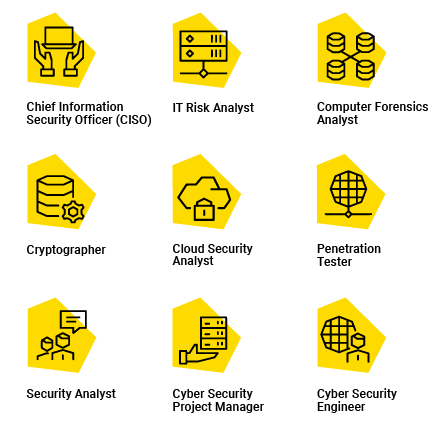
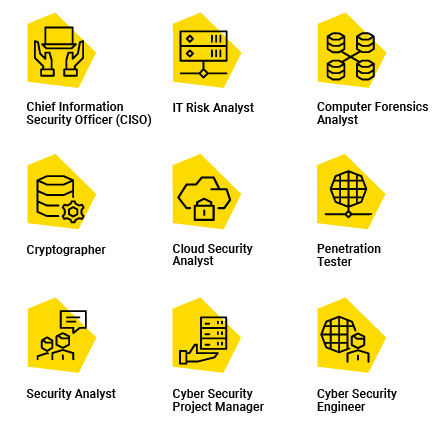
With a master’s in cybersecurity, graduates can pursue roles like cybersecurity analyst, security architect, penetration tester or incident response specialist. They might also explore leadership positions such as chief information security officer (CISO) or specialise in areas like cloud security, application security or digital forensics, working across industries like finance, defence, healthcare and tech sectors.
Security Engineering equips you with both foundational theoretical knowledge and practical, hands-on skills. You’ll learn to effectively communicate security recommendations, develop technical coding and analytical abilities, and undertake an exploratory project in Cyber Security.
Meanwhile, Security Management is perfect for those drawn to strategy, risk mitigation and governance leadership. Your career goals will determine which suits you better.
Yes. If you don’t have a background or degree in IT or mathematics, we recommend pursuing the Security Management specialisation. This pathway is designed to help you develop strong foundational skills and set you up for success in more advanced courses. Please note that admission to the Security Engineering specialisation is unlikely without a technical background.
In Australia, cyber security programs that combine technical expertise with industry relevance are in high demand.
The Master of Cyber Security at UNSW Online is a standout choice, designed to meet the needs of this rapidly growing field. This program offers two specialised streams – Security Engineering and Security Management – allowing you to tailor your learning to your career goals.
An 100% online cyber security course, it provides the flexibility to upskill while balancing work and other commitments. With a focus on practical, real-world applications and strong industry alignment, our program equips graduates with the skills employers are actively seeking in Australia’s cyber security market.
UNSW Online advises approximately 150 hours of study per course over the hexamester, which averages around 20–25 hours per week, depending on the course and week. The study mode is 100% online, with no on-campus requirements. You can finish in two years by taking one course per hexamester, and you also have the flexibility to take breaks or adjust your pace as needed.
As an online UNSW student, you’ll receive personalised, one-on-one support tailored to your needs, along with access to a range of study resources. You’ll stay connected with a dedicated Student Success Advisor for non-academic queries and facilitators who’ll help you stay on track and excel in your coursework. Want to learn more? Visit studyonline.unsw.edu.au/study-online.
The Master of Cyber Security includes 12 online courses, offering specialisations in Security Management and Leadership or Security Engineering. It features four core courses, at least four specialisation courses, electives and a capstone project.
You may qualify for Recognition of Prior Learning (RPL), which can help lower both your study workload and tuition costs. Eligibility for RPL is determined by any relevant postgraduate studies you've completed within the past 10 years. To apply, you'll need to provide your academic transcripts and work history for assessment with your application. For more details, contact a Student Advisor.
Each course requires approximately 150 hours per course over the seven-week study block, which averages around 20 to 25 hours per week on lectures, assignments and self-paced study. This may vary depending on your existing experience and the subject you're completing, but the program is structured to be manageable alongside full-time work.
With six intakes per year in January, March, May, July, August and October, you will not need to wait long to begin. Apply by the relevant cut-off date to secure your spot. Check out our key dates calendar for more information.
No, studying with UNSW Online does not make you eligible for a student visa, as all programs are delivered 100% online and can be completed from anywhere in the world. To be eligible for a student visa, you must enrol in an on-campus program that meets the visa requirements for studying in Australia.
No, you can study entirely online from your home country. UNSW Online programs are designed for flexible learning and do not require you to be in Australia. This means you don’t need a student visa to apply.
Yes, international students can apply for UNSW Online programs, provided they meet the entry requirements. A student visa is not required or will be issued.
Yes, a Master’s in Cyber Security is worth it for those looking to advance or transition into this high-demand field. As cyber threats increase, organisations are seeking skilled professionals to protect their systems and data, making advanced postgraduate studies a valuable investment. With strong job growth, competitive salaries and opportunities across all industries, it is a rewarding career path.
Courses like the Master of Cyber Security from UNSW Online provides you with advanced knowledge in areas like network security, ethical hacking and risk management. It prepares you for roles such as:
- Cyber Security Analyst
- Security Architect
- Chief Information Security Officer
Mastering cybersecurity can be challenging, as it requires a mix of technical skills, problem-solving abilities and continuous learning to keep pace with evolving threats. You will need to understand complex topics like encryption, network security, ethical hacking and risk management.
However, with dedication and the right education, it is an achievable goal. A graduate certificate in cyber security can provide a strong foundation, while a master of cyber security offers deeper expertise. There are many flexible cyber security courses available, including online cyber security courses, that allow you to build skills around your commitments. Many find the field rewarding due to its dynamic nature, high demand for professionals with a cyber security certificate, and the opportunity to make a significant impact protecting organisations and individuals.
The best master’s degree in cyber security is one that matches your career goals and offers strong industry relevance. Look for programs with practical technical depth, specialisation options, flexibility and clear pathways into your desired roles.
When comparing programs, consider technical depth, specialisation options, industry alignment, flexibility, career outcomes and entry pathways.
- Technical depth across core security areas
- Specialisation options aligned to your career goals
- Curriculum informed by industry needs
- Flexible, online study options
- Clear career outcomes and support
- Entry pathways for varied backgrounds
These criteria help you compare programs and choose the best fit for your goals.
The UNSW Master of Cyber Security is a strong example, with specialised streams in Security Engineering and Security Management, and a focus on practical, industry-aligned training.
A Master of Information Technology offers a broad education in skills like software development, networking and data analytics, preparing you for versatile roles across the tech industry.
In contrast, a Master of Cyber Security is a specialised program focused on protecting systems and data from digital threats. You'll concentrate on areas like ethical hacking and risk management to prepare for roles such as a Cyber Security Analyst or Security Engineer.
Essentially, an IT program provides a wider scope, while a cyber security course offers deep, specialised expertise.
To qualify for the Master of Cyber Security at UNSW Online, you need to meet one of the following criteria:
- Graduate Certificate Pathway: Successfully complete the Graduate Certificate in Cyber Security, or an equivalent program, with a minimum Weighted Average Mark (WAM) of 65.
- Graduate Diploma Pathway: Successfully complete the Graduate Diploma in Cyber Security or an equivalent program.
- Bachelor’s Degree Pathway: Hold a bachelor’s degree or higher qualification in a relevant discipline with a minimum WAM of 65.
Relevant Disciplines for the Bachelor’s Degree Pathway:
- For the Security Management & Leadership specialisation, relevant fields include Science, Engineering, Business, Leadership and Policy.
- For the Security Engineering specialisation, relevant fields include Science, Engineering or programs with substantial coursework in computing, mathematics or statistics.
These flexible pathways are designed to accommodate applicants from diverse educational and professional backgrounds.
The best field in cyber security depends entirely on your interests and career goals, as the industry offers a variety of specialised areas. Some of the most in-demand and rewarding fields include:
- Ethical Hacking (Penetration Testing): Identifying and fixing vulnerabilities in systems.
- Security Architecture: Designing secure systems and networks from the ground up.
- Incident Response and Forensics: Investigating and mitigating cyber attacks after they occur.
- Governance, Risk and Compliance (GRC): Ensuring organisations meet security standards and manage risks effectively.
- Cloud Security: Protecting data, applications and infrastructure in cloud environments.
Each field offers unique challenges and opportunities. A program like the UNSW Online Master of Cyber Security can prepare you for these technical, strategic and investigative roles, allowing you to build the specific expertise you need to succeed.
To find the best university for cyber security in Australia, look for programs that combine rigorous technical training with real-world application. Strong partnerships with defence and government sectors also indicate a curriculum designed to meet the highest standards and industry needs.
A strong example is UNSW, recognised as a leader in cyber security. The Master of Cyber Security, delivered 100% online, offers specialised streams in Security Engineering and Security Management, allowing you to shape your studies around your career goals.
A standout feature is UNSW’s partnership with the Australian Defence Force Academy (ADFA). The curriculum, developed with ADFA cyber security trainers, delivers defence-aligned practical training and academic rigour, preparing you for the roles employers value most in a rapidly evolving field.
Yes, cyber security is considered a highly skilled profession in Australia. With the increasing frequency and sophistication of cyber threats, there is a critical demand for professionals who can protect organisations and essential infrastructure.
Roles like Cyber Security Analyst, Security Engineer and Chief Information Security Officer require specialised skills in areas such as ethical hacking, risk management and network security. The Australian government has identified cyber security as a priority, which means you can expect strong job prospects, competitive salaries and significant opportunities for career growth.
Skilled professionals in this field are in high demand across all industries, making a cyber security career a rewarding and future-proof choice.
The Master of Cyber Security, from UNSW Online, is delivered by a global top 20 university* and distinguished member of the Group of Eight, in partnership with UNSW Canberra at the Australian Defence Force Academy (ADFA), it is the only cyber security master's in Australia with this combination, that is delivered 100% online, with no on-campus requirement. You will practice identifying and exploiting vulnerabilities in realistic environments and stay up to date with current attack techniques and emerging vulnerabilities through industry-grade platforms like HackThe Box (HTB), so you are prepared to thrive in real cyber threat situations.
A Master of Cyber Security from UNSW stands out because of the depth of its technical rigour and the global reputation of the university. Students learn not only from leading academics who are actively conducting cutting-edge research in areas such as privacy, AI security, and cyber threat analysis, but also from experienced industry practitioners who bring real-world perspectives into the classroom. The program offers two specialised streams and a wide range of cyber security electives that provide both breadth and depth across the discipline, allowing students to develop expertise in areas such as offensive security, security engineering, governance, and emerging technology risks. As a result, graduates develop both strong technical capability and a strategic understanding of cyber security, making them highly attractive to employers across industry, government, and defence sectors. You will learn key in-demand skills Python, Wireshark, Metasploit and Kali Linux.
Cyber security professionals in Australia earn a typical salary of $165,000 (Seek 2025). Employment is projected to grow 24% by 2035, with 14,762 job postings in 2025 and $586.9 million in Australian Government investment in cyber strategy (Austrade), making it an attractive career option.
*QS World University Rankings, 2024–2026
We understand that artificial intelligence introduces new security challenges. Our 100% online cyber security program takes a practical, attacker-focused approach to emerging threats. You will learn to identify and exploit vulnerabilities in LLMs, equipping you to defend critical systems against sophisticated attacks in the workplace.
You will build an in-depth understanding of how these models operate and where their weaknesses lie. The curriculum covers key areas to ensure you stay ahead of the threat landscape:
- Analysing LLM behaviour and architecture.
- Identifying and mapping new attack surfaces.
- Exploiting specific vulnerabilities such as prompt injection and data leakage.
Prompt injection is the technique of crafting inputs that manipulate an LLM into behaving in ways its designers didn't intend. It works similarly to social engineering – direct or obvious attempts rarely succeed with modern models, but a carefully constructed sequence of prompts can gradually shift a model's behaviour away from its guardrails. Understanding how this works is fundamental to being able to test for it.
It requires a fundamentally different approach. In traditional pentesting, a payload that works once will work again. LLMs are non-deterministic, meaning the same input can produce different outputs across attempts. That changes how you approach testing – persistence and varied technique matter far more than in conventional security assessments.
You will explore these topics in Advanced Penetration Testing (ZZEN9212). This course features new content specifically designed to address artificial intelligence vulnerabilities. By completing this course, you will gain hands-on experience in testing and securing AI integrations, preparing you for senior technical roles.
The curriculum is regularly updated to reflect the latest advancements and threats in AI and LLM technologies. By incorporating frameworks like OWASP Top 10 for LLMs and MITRE ATLAS, the program ensures you are learning industry-relevant skills.
Graduates are well-prepared for roles such as Cyber Security Analyst, Penetration Tester, AI Security Specialist and more. Throughout the program, you will explore emerging topics, including the security implications and vulnerabilities of LLMs, ensuring you are equipped for emerging challenges in AI-enabled environments.
In today’s rapidly changing digital world, cybersecurity isn’t just a technical discipline. It’s a critical foundation for organisational trust, resilience and innovation. At UNSW’s Cybersecurity Online Program, we empower learners with real-world skills, strategic insight and the confidence to confront tomorrow’s threats today, wherever they are and whatever stage they’re at in their career.
Dr. Rahat Masood
Cyber Security Program Director


Explore related cyber security programs at UNSW Online
Master's
Graduate Diploma
Graduate Certificate
Explore study areas related to cyber security
UNSW offers a variety of programs that can help you discover your passion, develop in-demand skills and find the pathway that aligns with your ambitions.

Online Financial Technology Programs
Transform how people and organisations manage money, data and digital assets.
View programs
Online Data Science Programs
Master the art of extracting meaning from complex datasets using advanced technical tools and methodologies. Build expertise in programming, machine learning and statistical modelling to uncover insights and drive innovation in any field.
View programs
Online Analytics Programs
Bridge the gap between data and decision-making by collaborating with business teams to tackle real-world challenges.
View programsUNSW Online articles